The storm has passed, the power is back, and the roof looks more or less the way it did. More or less is the problem. Wind damage is often small, high up and easy to miss, and a lifted shingle that lets in nothing today lets in the next rain. Here is what to check, in order, before you decide you got away with it.
From the ground, with your feet on it
Do not climb a wet roof after a storm. Everything on this list can be done from the yard, the sidewalk and the attic.
- Walk the perimeter. Look for shingles, pieces of shingle and granule piles on the ground and in the beds. A tab in the lawn came from somewhere.
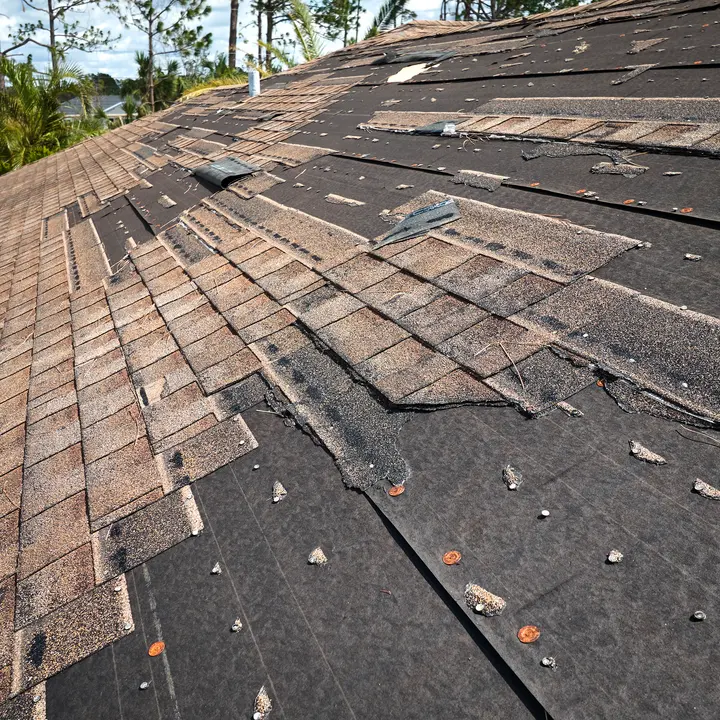
- Look up each slope. Shingles that are lifted, creased or missing, especially along the ridge and the edges where the wind gets under them. A crease across a shingle means it folded back and will not reseal.
- Check the gutters and downspouts. Sagging, pulled away from the fascia, or spilling granules. A downspout full of grit means the roof lost a lot of surface.
- Look at the flashing. Metal around the chimney, vents and any wall the roof meets. Bent, lifted or missing pieces are the leak you will have next week.
- Look for anything that landed. A branch on the roof may have punctured it where it fell even if it has since blown off.
- Check the siding and the soffits. Wind that damages a roof usually finds the siding too.
From the attic
Take a flashlight up and turn the lights off. Look for daylight through the deck, fresh water stains on the underside of the plywood, wet insulation and dripping at the nail tips. Do this again after the first rain that follows the storm, because a leak that started with the wind often waits for the rain to show itself.
Photograph everything
Before anything is moved or repaired, take pictures: the roof from each side, the debris on the ground, the attic, any stain inside, and the date. If a claim follows, the adjuster will want to see what the storm did before anyone touched it. Keep the pieces of shingle you find.
Call before the next rain
If you found anything on the list, call for an inspection now rather than after the ceiling stains. An opened seam or a lifted flashing can be secured in a visit, and a tarp is cheap insurance when a repair has to wait. We look at the whole roof, not only the spot you noticed, because wind rarely damages one place.
About the knock on the door
Storms bring out-of-town crews knocking on doors offering a free roof through your insurance. Be careful. You have the right to choose your own contractor, a reputable one will give you a written estimate and let you take it to your insurer, and nobody should ask you to sign anything on the porch. A company with a shop in Island Park and a century on Long Island roofs will still be here when the warranty matters.
What happens next
We come out, document what we find, give you a written estimate, usually the same day, and if there is a claim we work from the same report your adjuster sees. A repair is scheduled promptly; a replacement, when a storm has finished an old roof, is typically done in three to five days.